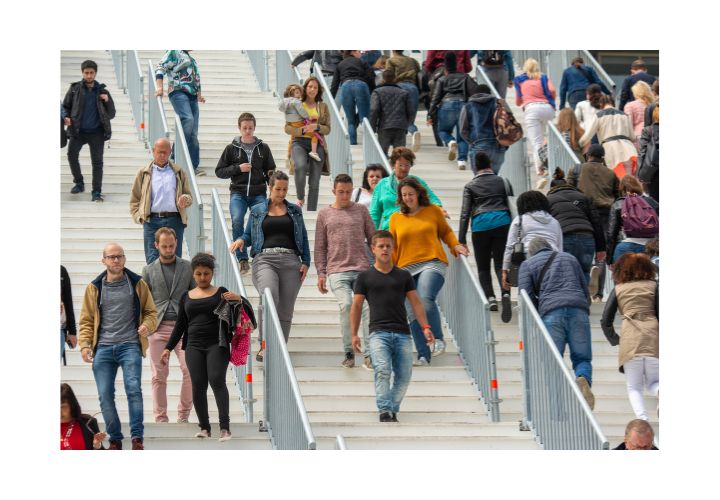
Humanity is in the midst of a profound and unprecedented transformation. The rapid expansion of knowledge, technology, and connectivity has accelerated change in every sphere of life—economic, political, cultural, ecological, and psychological. The World Academy of Art and Science views these developments not as isolated disruptions but as part of a larger evolutionary movement shaping the future of global society.
Throughout history, major advances—agriculture, urbanization, democracy, science, and universal education—have required shifts in values, institutions, and human relationships. What distinguishes the present moment is the speed and global scale of change, which often outpaces society’s capacity to understand, adapt, and govern effectively. This imbalance has generated turbulence: a widening gap between knowledge and wisdom, power and purpose, capability and consciousness.
The Academy emphasizes that social transition is not a mechanical or purely structural process; it is fundamentally psychological and cultural, driven by changes in awareness, aspiration, and identity. Two forces interact continuously: the progressive impulse that seeks new forms of cooperation and creativity, and the conservative impulse that clings to established patterns of power and belief. Their tension produces instability, but it also releases the energy needed for higher forms of organization.
The contemporary challenges—economic inequality, climate stress, social fragmentation, and political polarization—are symptoms of this deeper shift. They signal the breakdown of outdated systems and the emergence of a more integrated global society based on interdependence and shared humanity.
WAAS affirms that the aim of social transition is not merely to adapt to change but to guide it consciously—transforming fear into creativity, competition into cooperation, and fragmentation into unity. When supported by insight, values, and collective will, the turbulence of transition becomes a powerful engine of human evolution, enabling society to reorganize itself at a higher level of coherence and purpose.
PROJECT
This project examines the deep and interconnected forces driving instability in the contemporary world. Rising conflict, economic inequality, climate disruption, technological upheaval, erosion of trust, and weakening institutions are not isolated crises; they are symptoms of a broader systemic transformation unfolding at the global level. This initiative seeks to understand the underlying causes of this turbulence and to identify pathways for transforming disruption into conscious, constructive social evolution. Read more.

PROJECT
This project addresses the growing gap between the scale of global challenges and the capacity of existing leadership systems to respond effectively. In a world marked by accelerating change, systemic risk, and declining trust in institutions, leadership is increasingly tested by complexity that transcends national, sectoral, and disciplinary boundaries. This initiative focuses on identifying and activating strategies that can catalyze more effective, ethical, and collaborative forms of global leadership. Read more.

PROJECT
This project explores the profound transition underway in global society as humanity moves beyond inherited models of thought, development, and governance. The dominant paradigms that shaped progress over the past two centuries—rooted in competition, specialization, material growth, and national self-interest—are increasingly unable to address the complexity, interdependence, and scale of contemporary global challenges. This initiative seeks to understand the nature of this paradigm shift and to clarify the opportunities and risks it presents. Read more.

PROJECT
This project examines the growing gap between human aspirations and the capacity of social, economic, and political systems to fulfill them. As education, communication, and awareness expand worldwide, expectations for dignity, opportunity, and participation have risen dramatically. When institutions fail to keep pace with these rising aspirations, frustration, unrest, and social polarization emerge. This initiative seeks to understand the dynamics of this phenomenon and its implications for global stability and development. Read more.

PROJECT
This project seeks to understand the underlying principles and dynamics that govern the evolution of human societies. Rather than viewing social change as a series of isolated events or policy outcomes, this initiative approaches development as a continuous, multi-dimensional process shaped by interacting economic, political, cultural, psychological, and technological forces. Its purpose is to clarify how societies progress, stagnate, or regress, and how development can be guided consciously toward more inclusive and sustainable outcomes. Read more.