
New Paradigm: Opportunities & Challenges
This project is based on the recognition that today’s crises are not merely operational failures but signals of deeper conceptual limitations. Economic instability, environmental degradation, technological disruption, social polarization, and governance breakdowns reveal the inadequacy of fragmented approaches to global problems. Addressing these challenges requires a new framework of thinking that integrates knowledge across disciplines and aligns power with ethical purpose.
A central focus of the initiative is the emergence of a human-centered paradigm—one that places human security, wellbeing, sustainability, and shared responsibility at the core of development. This paradigm emphasizes cooperation over competition, integration over fragmentation, and long-term resilience over short-term gain. At the same time, the transition to a new paradigm is inherently disruptive. It generates resistance, uncertainty, and institutional inertia, as established systems struggle to adapt to new values and modes of organization.
The project examines both the creative potential and the destabilizing effects of this transition. It seeks to identify the conditions under which paradigm change can be guided consciously, minimizing social costs while maximizing collective benefit. This includes understanding the role of leadership, education, culture, and values in shaping acceptance and implementation of new models.
Ultimately, New Paradigm: Opportunities & Challenges aims to support humanity’s capacity to navigate transformation with insight and foresight—turning disruption into a catalyst for a more coherent, equitable, and sustainable global future.
EVENT
Roundtable on Global Governance: Challenges & Opportunities
Croatia, November 22-24, 2018
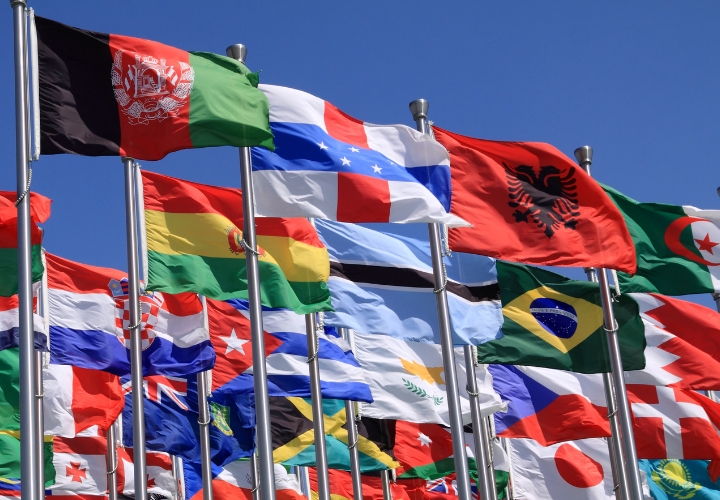
This roundtable, organized by WAAS in collaboration with the Inter-University Centre (IUC), examined the growing mismatch between traditional international systems and the complex crises of the 21st century. The sessions explored why existing structures struggled to manage issues like unregulated technology and climate change, ultimately seeking a redesign of global governance to make it more inclusive and effective. Participants focused on transitioning toward a new global architecture that prioritized human security and collective action over narrow national interests. Read more.
EVENT
New Paradigm and Planetary Engagement
South Korea, Sep 22-23, 2016
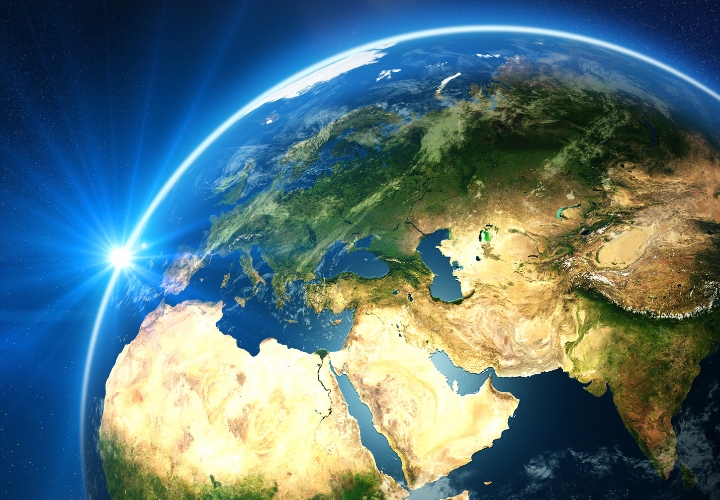
Organized by WAAS in collaboration with Kyung Hee University (KHU) and the World University Consortium (WUC), this colloquium examined the urgent need for a shift in global consciousness to address escalating environmental and social crises. Participants explored how a “New Paradigm” could move humanity beyond a culture of exploitation and toward a state of active planetary engagement and integral ecology. The discussions emphasized that survival in the 21st century required a radical change in higher education, advocating for a transition from competitive nationalism to a shared responsibility for the global commons. Read more.
EVENT
Paradigm Shift
CERN, November 10, 2015
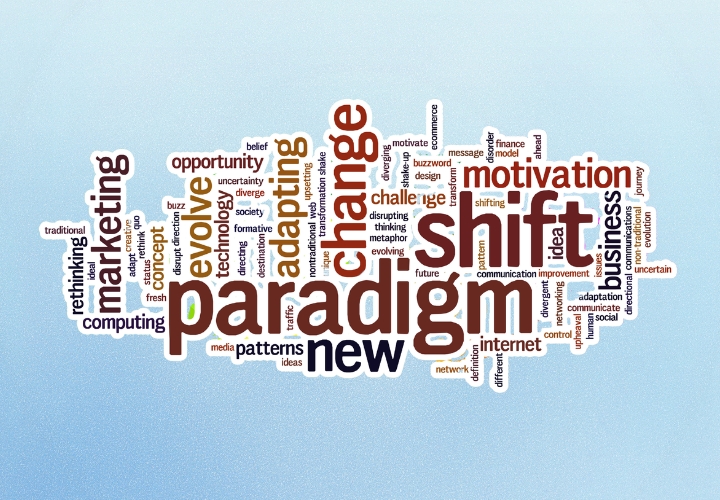
This conference, organized by WAAS in collaboration with the United Nations Office at Geneva (UNOG), examined the necessity of a fundamental shift in the global development model to address the multifaceted crises of the 21st century. Participants analyzed how current economic, political, and social theories were failing to provide security and sustainability in an increasingly interdependent world. The discussions centered on moving toward a “New Paradigm” that prioritized human welfare, integrated transdisciplinary knowledge, and established a more democratic system of global governance to ensure stable progress for all. Read more.
Events
- WAAS@65 Addressing Global Social Turbulences
July 21-24, 2025 - New Delhi General Assembly
November 9-11, 2011 - Role of Crises in Social Evolution: Lessons from History
May 13, 2013 - Opportunities & Challenges for the 21st Century, Geneva
June 3, 2013 - Opportunities & Challenges for the 21st Century, Egypt
June 5 & 6, 2013 - Opportunities & Challenges for the 21st Century, USA
September 14-15, 2013 - Opportunities & Challenges for the 21st Century, Canada
September 17-18, 2013 - New Paradigm for Human Development
April 30, 2014 - New Paradigm of Sustainable Human Development
November 5-7, 2014 - The State of the World, Need for the New World Paradigm and Role of Ukraine in it
April 25, 2015 - Framework for a New Paradigm of Human Development
April 30, 2015 - Anticipation & Complexity 2
July 21, 2015 - Paradigm Shift
November 10, 2015 - Future of Democracy: Challenges & Opportunities
November 9, 2018 - Governance & Law: Challenges & Opportunities
November 5-6, 2018 - New Paradigm and Planetary Engagement: A Call for responsibility
Sep 22-23, 2016 - Future of Democracy: Challenges & Opportunities
April 3-5, 2018
Reports & Articles
- Human Security For All (HS4A) Report
October 2022 – March 2024 - Cadmus Journal. Special Issue on Human Security: Part 2
August 2023 - Cadmus Journal. Special Issue on Human Security Part 1
March 2023 - Human Security: Practical, Urgent, and Necessary – Jonathan Granoff
September 20, 2022 - Approaching Human Security – Jonathan Granoff
November 6, 2020 - Integrated Approach to Peace & Human Security in the 21st Century – Garry Jacobs
October 26, 2016 - A New Paradigm in Global Higher Education for Sustainable Development and Human Security
November 29, 2021 - ‘National Security’ is Too Crude to Protect Us From Pandemics. It’s Time to Shift to Human Security Instead — Newsweek
March 17, 2020 - Building human security for Afghanistan – The Hill
28 August, 2021