Online | June 10, 2026 | 14:00 CEST
Averting Water Bankruptcy: Global Water Supply Risks and Countermeasures
An EXTRA Webinar (Existential Threats and Risks to All), an initiative of WAAS (World Academy of Arts and Science).
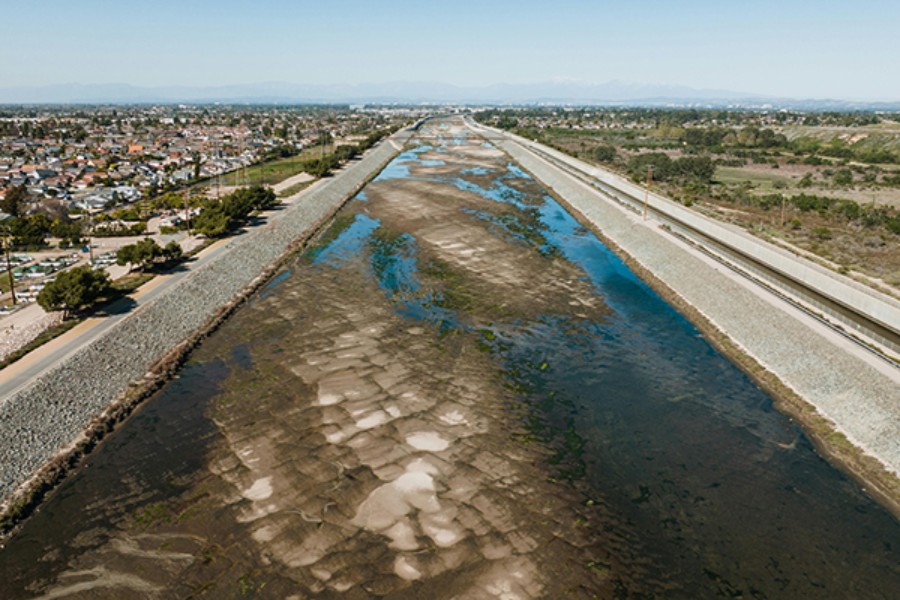
Water security was named a top priority in the UN’s 2030 Agenda, as SDG 6, and the UN University’s Institute for Water, Environment and Health (UNU-INWEH) in Canada has been tracking the trend towards increasing water insecurity for three decades now. Their latest flagship report issues a dire warning: Across many regions, water systems are under unprecedented pressure. Rivers, lakes, and wetlands are degrading, groundwater is being depleted, and glaciers are retreating at an accelerating rate. Meanwhile, demand is rising, and competition for water among different sectors is growing, from agriculture to hydropower and AI data centres. This structural imbalance between rising demand and dwindling supply has led to a potentially irreversible condition, the authors refer to as “Water Bankruptcy”.
Taking this report as our point of departure, Ana Maria Pareschev and Prof Thomas Reuter from the EXTRA team host four highly experienced sustainability experts and practitioners from around the world, who will share with us their unique and diverse perspectives on the emerging water crisis and potential countermeasures.
Hosted by the EXTRA Team

Ana Maria Paraschiv
Chair, Ubuntu World
Communication and Networking Specialist, EXTRA
Thomas Reuter
Chair, EXTRA
Speakers
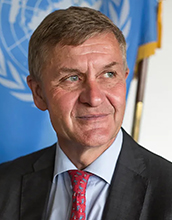
Erik Solheim
Former director, UNEP
Erik served as Norway’s Minister of International Development and Minister of the Environment (2005 to 2012), as head of the OECD’s Development Assistance Committee (2013) and as Under-Secretary-General of the United Nations and Executive Director of the UN Environment Programme from 2016 to 2018. He is President of the Belt and Road Green Development Initiative, a senior adviser at the World Resources Institute, and the chief mentor to the Global Alliance for Sustainable Planet. He is also on the board of The International Hydropower Association (IHA).
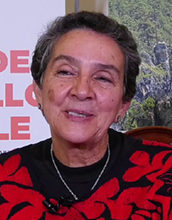
Dr. Norma Patricia Muñoz Sevilla
Protect Our Planet (POP) Global Youth Movement
Norma trained as a marine biologist and has led or participated in 59 research projects related to marine resource management, coastal development, water resources, marine pollution, and coastal area management, among others, mostly at the National Polytechnic Institute and Conacyt. She has been a member of the New York Academy of Sciences, the American Chemical Society, the National Advisory Council for Sustainable Development (Semarnat), and the Coordinator of the Institutional Environment Network (IPN) of the Environmental Policy Committee of Pronatura, Mexico. She is the scientific coordinator for Mexico of the Observatory of Seas and Coasts, Scientific Counsellor of the Board of Directors of the Environmental Fund of the National Institute of Ecology and Climate Change, member of the Consortium of Institutions of Marine Research for the Gulf of Mexico and the Caribbean Sea, as well as President of the Climate Change Council of the Presidency of the Republic of Mexico.
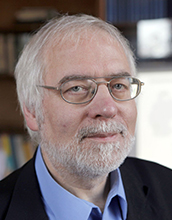
Prof Manfred Stock
Potsdam Institute for Climate Impact Research (PIK)
Prof Stock is a physicist and has been a leading contributor to the PIK Research Department for Climate Resilience, where he is a senior advisor for Regional Sustainable Strategies concerning Climate and Global Change Impacts. Manfred Stock studied Physics, Mathematics and Biology. He received his PhD in experimental solid-state physics. Before joining PIK, he acted for more than twelve years as an expert consultant, with a focus on Safety and Environmental Audits.
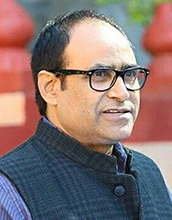
Vinod Mishra
UNOPS India Country Manager
Vinod Mishra has 20 years of experience in the water and sanitation sector, including project management, training and capacity building, and planning and implementation support for WASH (water, sanitation & hygiene) programs across districts, states, and at the national level in India. He was the team leader at UNOPS for implementing the WSSCC (Water Supply & Sanitation Collaborative Council) project in India and developed the WSSCC implementation strategy to support the Swachh Bharat Mission in India from 2014 to 2019. Recent work has focused on policy advocacy to promote collective behaviour change, equity and inclusion, capacity building, rapid action learning, and studies and research. He has worked with the Ministry of Jal Shakti to provide support to 45 districts in India under the Swachh Bharat Mission, which is linked to SDG-6. As Country Manager at UNOPS India, he implements projects in water supply (Jal Jeevan Mission), sanitation, circular economy, and health. He has postgrad degrees in Political Science and International Relations, and an MBA in Human Resources.