In the years following the two catastrophic World Wars of the 20th century, a number of cultural initiatives were founded. The World Academy of Arts and Science, established in 1960 and our partner organization, the Club of Rome in 1968, have both aimed to bring whole systems and inclusive perspectives and approaches to global issues; respectively as a forum for the reflective interplay of arts and science and as a collaborative think tank
In the decades since, the communities of WAAs and CoR have done much to address the global challenges of our times – but within a world whose collective mindset was not yet ready to take as seriously as did many of their co-founders and members, its inherent interconnectedness.
Without disputing the empirical evidence, both organizations have sought to countervail the still dominant worldview that emerged from the scientific revolution of the 17th to 19th centuries. In pursuing a limited focus on reductionism and based on the premise of a mechanistic universe, while undoubtedly enabling material progress, it evaded, for most of that time, recognition of whole-systems complexity and ruptured our perception and relationship to a deeper, more unitive understanding of life.
Its technological power drove the Industrial Revolution and, with its associated economics and governance hierarchies, led to colonialism, competitive race for resources, extractive exploitation and externalities of social costs and harms. Its systemic structures engendered the geopolitical schisms that bled into the WWII conflicts and remain unresolved, to others continuing to play out today.
Now, though, the unhealed fragmentations and consequential behaviors, in addition to conflicts, have resulted in an interlocking poly-crisis of existential threats, a deeper meta-crisis and trauma caused by a perceived lack of intrinsic meaning and, at their foundational root, a fallacious worldview of separation.
***
Worldviews are the lenses through which we see the world, and so, whether or not we are consciously aware of their tenets, they underpin our mindsets and frame what we allow ourselves to perceive.
Cultures act as the ‘ways of life’ through which we then live the beliefs, perceptions, and values of what we see. They are embodiments of our collective identities, social fabrics and communal cohesions.
Arts are then the multitude of creative expressions that shape a culture’s narrative and tell stories through and by invoking intellectual, emotional and experiential engagement.
Throughout history, new ideas have had the power to shift worldviews. And by changing the lenses through which we see the world, they have transformed cultures and inspired artistic imagination to cultivate vision and empower potential.
Pioneering artists, such as those who helped establish WAAS, have also been at the vanguard of fledgling new ideas, helping to ignite sparks of potential into flames of emergence.
While transformational ideas stirred the Axial Age, Renaissance, Copernican, and Industrial Revolutions, it was the congruence between worldviews, cultures, and arts that embedded a transmuted perspective in the psyche of the societies that adopted them.
Although scientific discoveries and insights of the 20th and early 21st century have progressively revealed that a mechanistic worldview is fundamentally incorrect, they have as yet been unable to dislodge its collective hold and so the systems that it perpetuates.
As co-founder of WAAS, Albert Einstein noted: “The world as we have created it is a process of our thinking. It cannot be changed without changing our thinking.”
Given the unsustainability of our current global state, both our world and our thinking may be about to change and radically so.
***
Amidst the turbulence of the poly-crisis and realization of a deeper meta-crisis of meaning, scientific breakthroughs at all scales and across numerous fields of research are turning our prevailing worldview of separation on its head – and inside out.
Recognizing this emergent understanding, our partner organization the Club of Rome recently invited me to write an evidence-based discussion paper entitled The Unitive Science of a Living Universe1. Converging with universal wisdom teachings and Indigenous traditions, it asks: How might a more relational and interconnected understanding of the universe influence how we see and experience ourselves and our responsibilities to each other and our planetary home?
In positing that, foundationally, as did Einstein and other leading scientists and now supported by ever-increasing data, mind and consciousness aren’t what we have but what we and the whole world intrinsically are, the worldview described by unitive science is of a universe that is able to reconcile science and spirituality. In doing so, it also invites us to re-member that we are each unique and yet inseparable participants on inner and outer levels with our universe’s existential meaning and emergent potential.
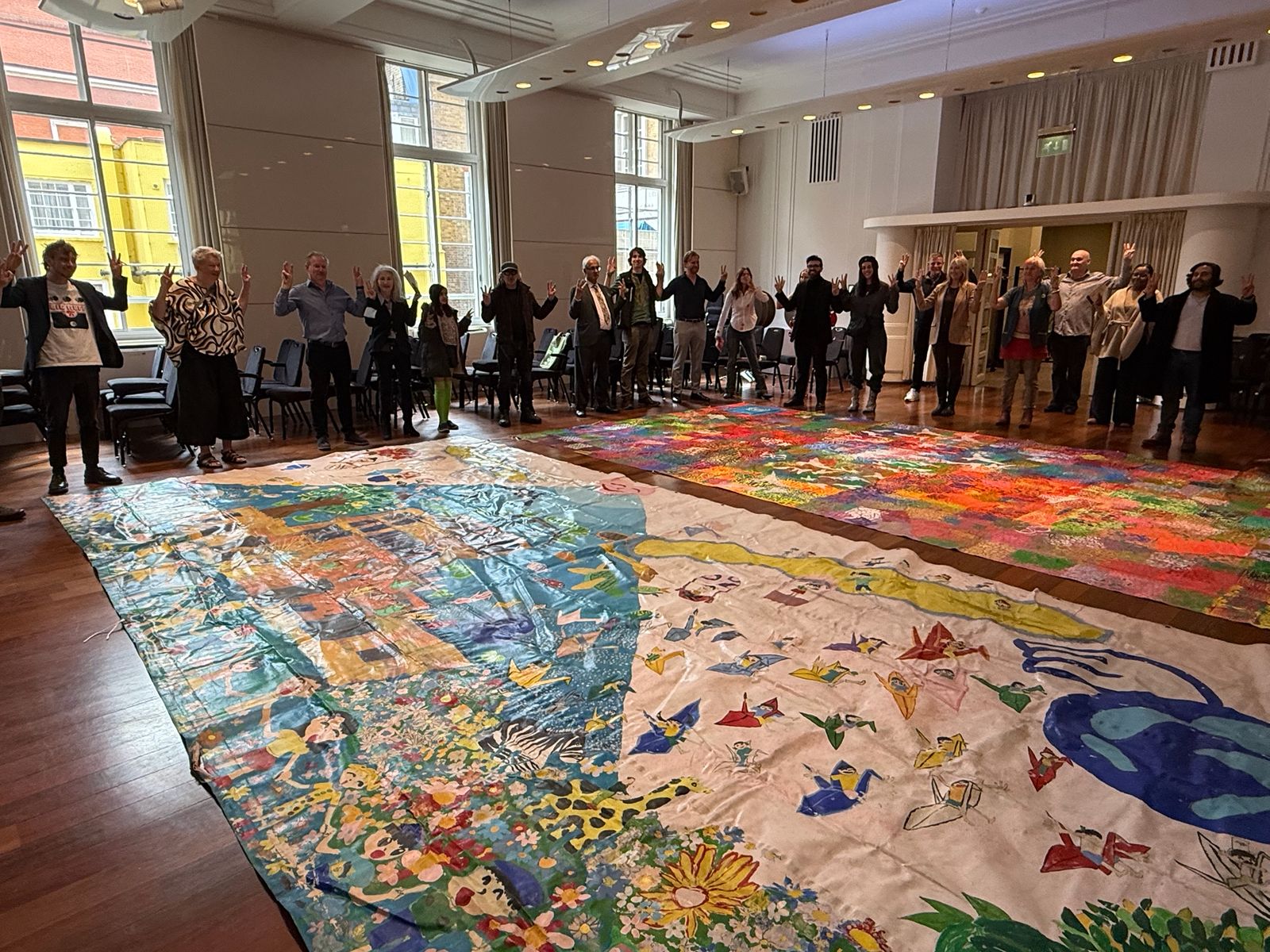
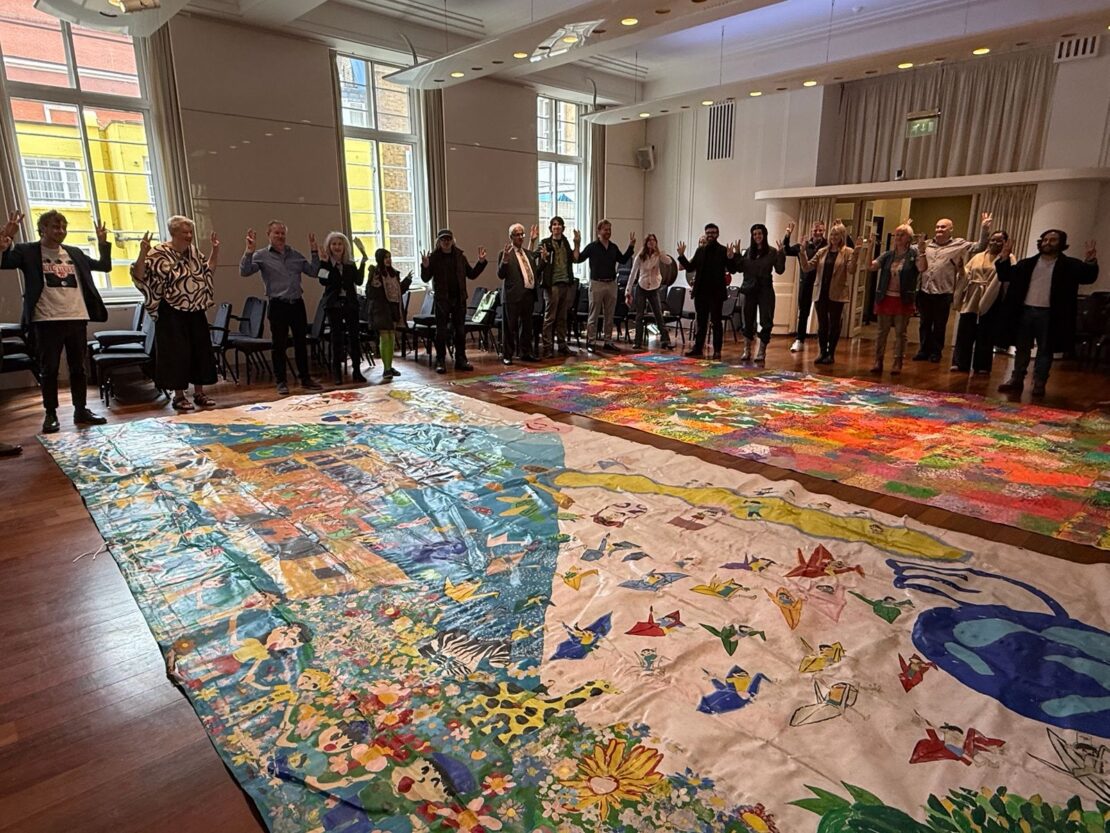
In these pivotal times, through the myriad languages of creativity, WAAS’s initiative of a Planetary Arts Movement2 is envisioning a world where all forms of the arts join forces to co-create a culture of peace and secure the inclusive well-being of future generations.
Its mission profoundly aligns with this unitive perspective, narrative and vision. Together with a complementary Club of Rome paper entitled The Possibility of Transformation Through a New Humanism3, we invite inspirational and empowered engagement, planetary kinship and multidisciplinary leadership to harness the power of artistic expression. Through advocacy, networks and community actions we aim to awaken a shared purpose and cultural transformation, sparking creative and collaborative solutions that catalyze and lead to a flourishing planetary home for all life.
***
In late 1512, Michaelangelo, a child of the Renaissance and co-weaver of science and spirituality, completed painting his masterpiece of the Sistine Chapel ceiling. At its center, the iconic image of the finger of God reaching to extend a divine spark to be imbued into the outstretched finger of Adam. It speaks to us over the centuries and at a moment when we can collectively awaken to realize our innately sacred nature and belonging.
Just as the Renaissance inspired both outer innovations and awakened expanded innervations, so now a unitive vision expressed through culture and arts empowers not only innovations of restorative and regenerative technologies but innervations that invite us into a (r)evolutionary new adventure of discovering what it means to be human.
References: