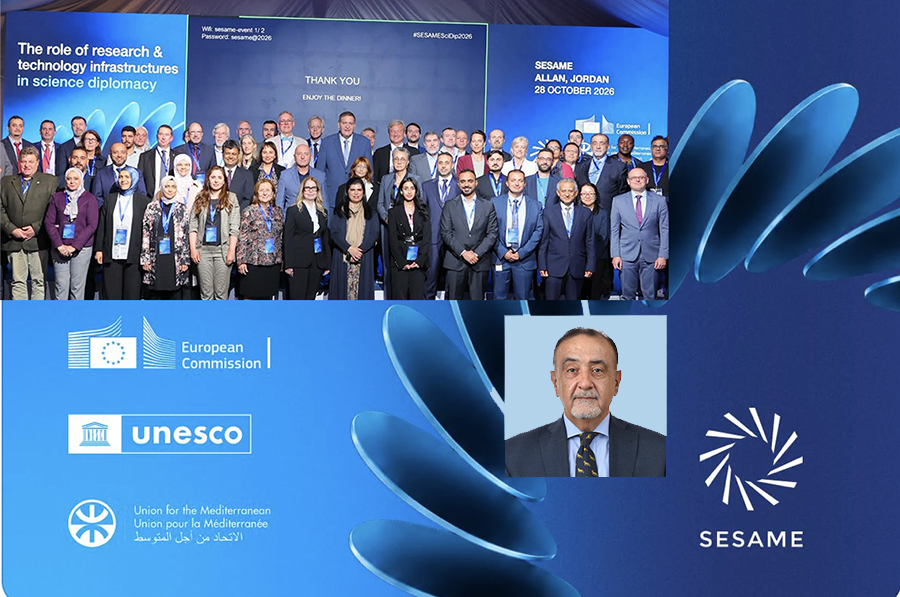
At the invitation of UNESCO, I participated on 28 October 2026 in the symposium The Role of Research and Technology Infrastructures in Science Diplomacy, held at the SESAME (Synchrotron-light for Experimental Science and Applications in the Middle East) facility in Allan, Jordan. The event brought together senior representatives of scientific institutions, governments, international organizations and research infrastructures to examine how science diplomacy can contribute to international relations, regional stability and sustainable development.
The inaugural session featured contributions from representatives of the European Commission, the Union for the Mediterranean, UNESCO, the European Union Delegation to Jordan, the Jordanian government and SESAME. A recurring message was that science diplomacy can serve as an important instrument of multilateralism, particularly amid growing geopolitical tensions and fragmentation. Speakers highlighted its potential to sustain dialogue across political divides, build trust and address shared challenges through science. The possibility of establishing a regional centre for science diplomacy in the Mediterranean was also raised for consideration. Such a centre could connect scientific and diplomatic communities, strengthen regional networks and promote science diplomacy across the Euro-Mediterranean region.
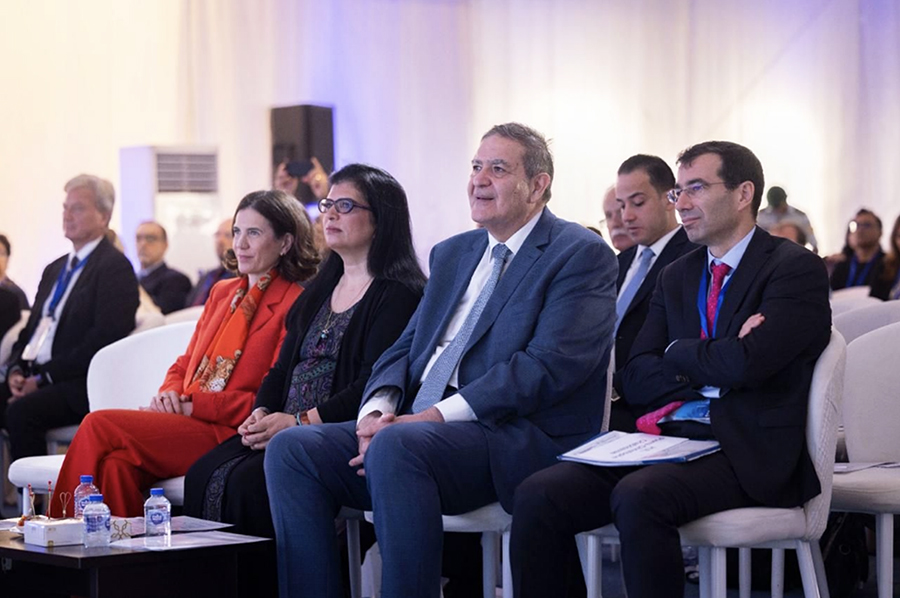
The first session, Science Diplomacy in a Fragmented World, examined the contribution of scientific engagement to maintaining international dialogue in a changing geopolitical environment. A recurring message from several speakers was that science is fundamentally about finding solutions, while science diplomacy is about building trust—creating the conditions in which scientific knowledge can help bridge political divides and address shared challenges.
Particularly noteworthy was the observation by Professor Karen Hallberg, Secretary-General of the Pugwash Conferences on Science and World Affairs, that the Pugwash movement had, in effect, been practicing science diplomacy since its establishment in 1957, long before the term itself came into common use. This prompted reflection on the historical connection between Pugwash and the World Academy of Art and Science (WAAS), of which I am a Trustee. Their relationship is more than one of shared ideals: four of the eleven signatories of the 1955 Russell–Einstein Manifesto—Albert Einstein, Bertrand Russell, Joseph Rotblat and Hermann J. Muller—were also among WAAS’s founders. The Manifesto provided the intellectual impetus for the first Pugwash Conference in 1957, while WAAS was formally established in 1960. Both initiatives reflected a conviction that scientists have a responsibility extending beyond their specialist disciplines: to address the ethical, political and societal consequences of scientific progress and contribute to peace and the future of humanity.
Among the other speakers in the first session was Professor Robbert Dijkgraaf, President-Elect of the International Science Council (ISC), a distinguished mathematical physicist and former President of the Royal Netherlands Academy of Arts and Sciences, whose career has bridged scientific research, public policy and international engagement. The session also included representatives of PRIMA Foundation, the EU Science Diplomacy Alliance and other institutions.
Two keynote presentations further explored the role of major research infrastructures. HRH Princess Sumaya bint El Hassan, President of the Royal Scientific Society, was particularly prominent in this context, reflecting her longstanding role as a leading champion and patron of science, scientific research and innovation in Jordan and across the Middle East. Her commitment to advancing scientific excellence, supporting researchers and promoting the role of science in addressing regional challenges has made her an influential advocate for the scientific community. Her presentation addressed the importance of research and technology infrastructures in science diplomacy, while Professor Rolf-Dieter Heuer, President of the SESAME Council, reflected on CERN and SESAME as examples of scientific institutions that can transcend political boundaries.
The subsequent session considered how research infrastructures can contribute to peacebuilding and international engagement. Contributions drew on experiences from institutions including ICTP, the Arava Institute, UNIMED, the American University of Beirut and Damascus University. The discussion demonstrated the potential of shared scientific facilities and networks to create constructive spaces for engagement, including in regions affected by political tensions.
A further session examined the contribution of research and technology infrastructures to national and regional competitiveness, with perspectives from Oman, Slovenia, Jordan, Malta and Lebanon. A presentation on quantum research also considered how specialized infrastructures can support emerging technology ecosystems.
The program included a valuable session in which young researchers presented examples of their work at SESAME. Their contributions illustrated the facility’s role not only as a major scientific resource but also as a platform for developing research skills, international networks and the next generation of scientists.
The final substantive session explored possible futures for SESAME, with contributions from representatives of IIASA, the European Synchrotron Radiation Facility (ESRF), the proposed Iranian Light Source Facility, Italy’s National Research Council and the African Light Source Foundation. The discussion addressed the future development of research infrastructures and their potential to broaden scientific capacity and international engagement.
An important related initiative discussed during the symposium was the effort by several participants to advance the establishment of a synchrotron light source in Africa. Africa remains without a synchrotron facility of its own, despite the existence of approximately 60 such facilities worldwide. The efforts to mobilize scientific and institutional support for an African Light Source deserve recognition. Such a facility would address a significant gap in the continent’s research infrastructure, expand opportunities for African scientists and strengthen the continent’s participation in international scientific collaboration.
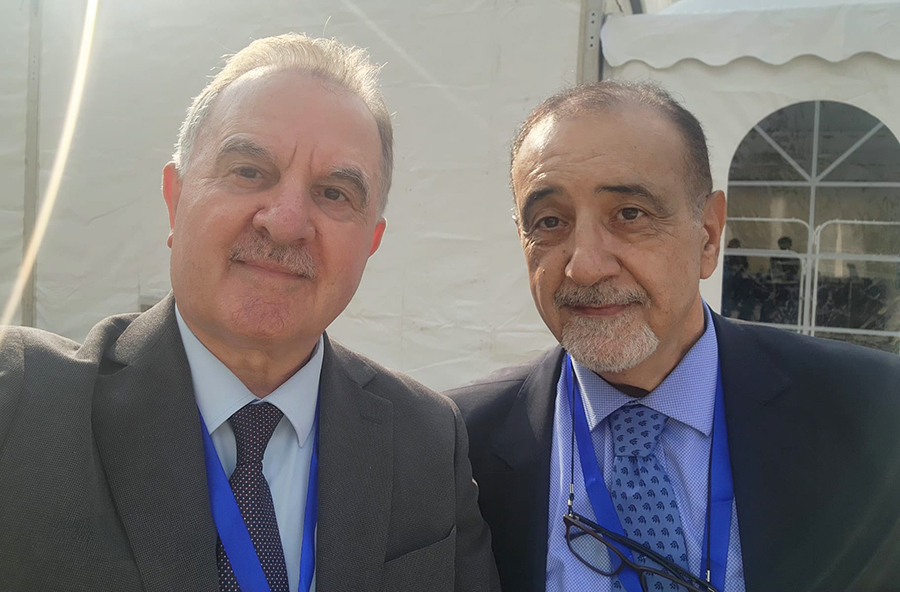
The symposium offered a timely opportunity for me to meet Prof. Robbert Dijkgraaf, President-Elect of the International Science Council (ISC). A distinguished mathematical physicist and academic leader, Dijkgraaf served as the Netherlands’ Minister of Education, Culture and Science from 2022 to 2024. His previous positions include President of the Royal Netherlands Academy of Arts and Sciences and Director of the Institute for Advanced Study in Princeton, New Jersey.
Dijkgraaf’s career spans scientific research, national science policy, international scientific advice, and the leadership of major academic institutions. His forthcoming leadership of the ISC is particularly relevant at a time when the international scientific community is seeking to strengthen science’s contribution to global policymaking and address challenges that transcend national boundaries.
I also enjoyed meeting Dr Khaled Toukan, Director of SESAME and a longstanding personal friend. Dr Toukan has been the key mover in developing SESAME into a major regional research facility serving scientists from across the Middle East and neighboring regions. Toukan’s leadership illustrates the sustained institutional commitment required to develop and operate an advanced research facility while maintaining its international mission.
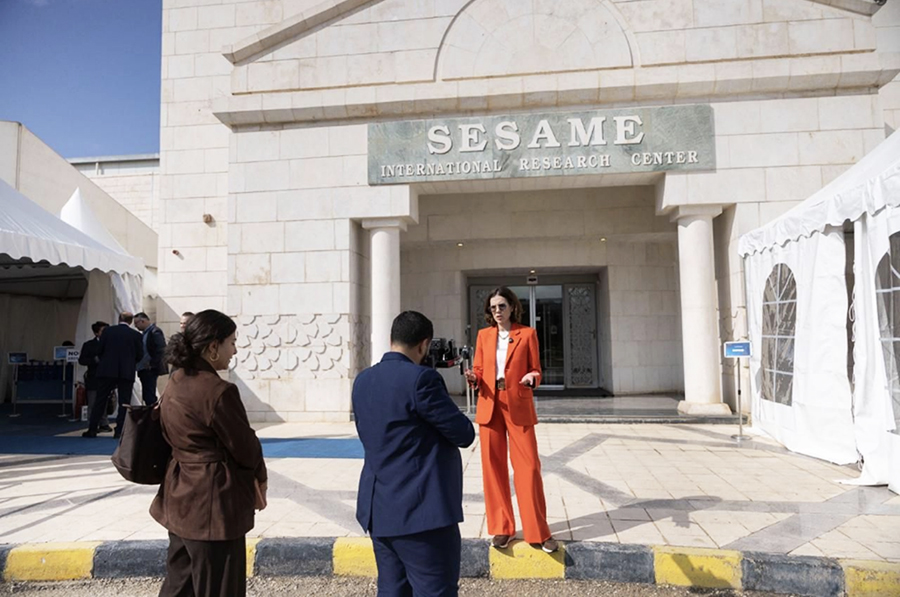
Of the most enjoyable aspects of the visit was the opportunity to take a fresh tour of SESAME, which I had not visited for a considerable period.
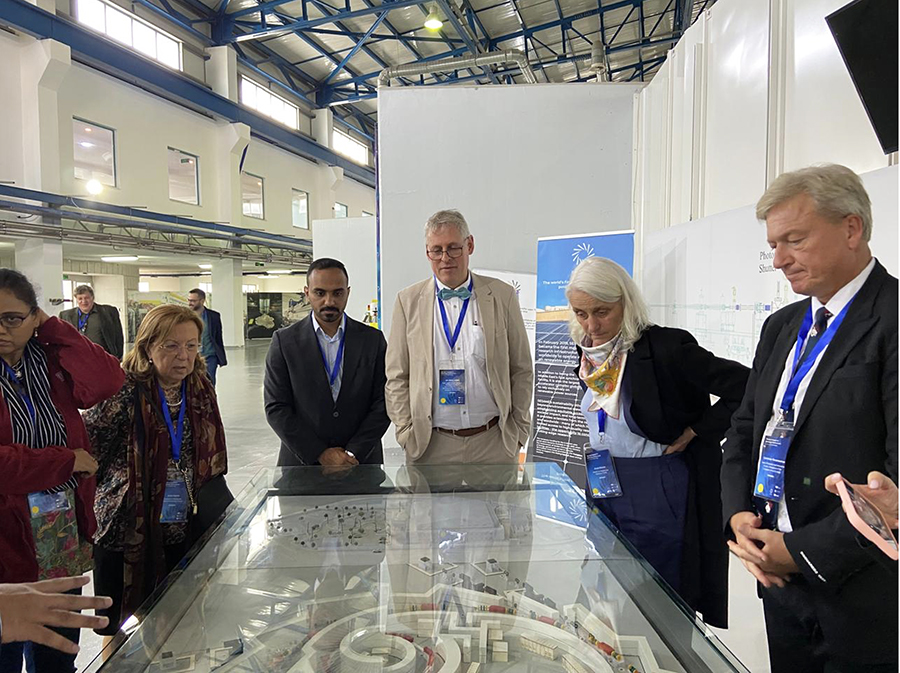
The tour allowed me to renew my familiarity with the facility and appreciate the scientific capabilities and organizational effort involved in operating a major international research infrastructure. SESAME provides researchers with access to synchrotron light and specialized experimental techniques that support investigations across a range of scientific disciplines.
Beyond its scientific functions, SESAME represents an important regional undertaking: an international research facility built around shared scientific objectives and collaboration among researchers from different countries. It offers opportunities for advanced research, technical training, and the development of expertise that may otherwise be difficult for individual institutions to access independently.
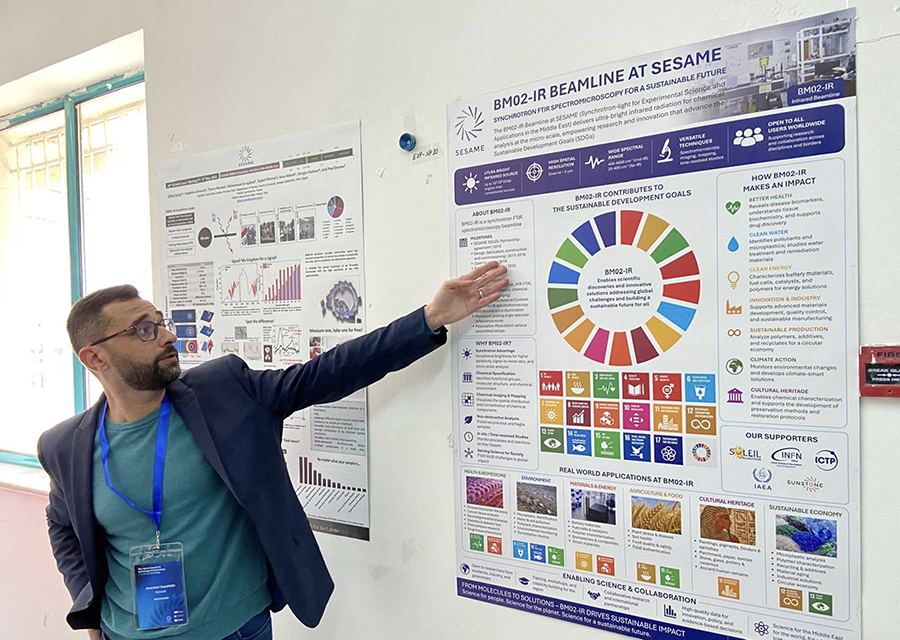
Revisiting the facility was therefore both a personal pleasure and a reminder of the importance of sustained investment in scientific infrastructure. Its long-term contribution depends not only on advanced equipment but also on skilled researchers, effective management, international partnerships, and opportunities for younger scientists to participate in frontier research.
The symposium reinforced the importance of viewing research infrastructures as more than facilities for scientific discovery. They can also function as platforms for diplomacy, dialogue and trust-building, bringing together researchers and institutions across national and political boundaries. SESAME is a particularly meaningful example: a shared scientific enterprise in a region where sustained dialogue and multilateral engagement are especially important.
The discussion of a possible Mediterranean science diplomacy centre was therefore a timely development. If taken forward, it could help translate the symposium’s ideas into a more sustained regional initiative, linking scientific excellence with diplomatic engagement.
I am grateful to SESAME and the organizers for the invitation and for bringing together such a distinguished group of speakers and participants. The symposium was a valuable opportunity to reflect on how science diplomacy and shared research infrastructures can contribute to a more connected, peaceful and sustainable future.