
Global Rule of Law
This initiative is grounded in the principle that law must evolve alongside global interdependence. While national legal systems remain central to governance, many contemporary issues—armed conflict, environmental degradation, financial instability, cyber threats, and human rights violations—transcend national jurisdiction. Addressing these challenges requires legal norms and institutions capable of guiding behavior, resolving disputes, and enforcing responsibility beyond borders.
The project emphasizes that the rule of law is not merely a technical or procedural matter; it is a moral and social commitment. Legal systems derive legitimacy from their capacity to uphold justice, equality, and fairness. When law is applied selectively or undermined by power politics, trust erodes and conflict intensifies. Strengthening the global rule of law therefore requires aligning legal principles with universal values and ensuring that all actors—states, institutions, and individuals—are subject to common standards of responsibility.
A central focus of the initiative is the relationship between law and human security. Legal frameworks play a critical role in protecting rights, preventing violence, regulating technological and economic activity, and safeguarding the environment. Effective law enables prevention rather than reaction, stability rather than coercion.
Ultimately, the Global Rule of Law project seeks to support the evolution of a rules-based global order in which justice, accountability, and cooperation replace arbitrariness and force. By reinforcing the legal foundations of global society, the project contributes to a more peaceful, secure, and sustainable future for all.
EVENT
WAAS@60 – A Planetary Moment
Online, February 15-19, 2021
Marking the 60th anniversary of the World Academy of Art and Science, WAAS@60: A Planetary Moment served as a high-level strategic intervention during a period of unprecedented global systemic crisis. The event transcended traditional academic celebration to address the “perfect storm” of existential threats—including the climate emergency, nuclear proliferation, and the disruptive power of new technologies—that current governance structures are failing to manage. By convening global thought leaders and policymakers, the conference focused on catalyzing a transition toward a new human-centered development paradigm, emphasizing that the survival of civilization now depends on shifting from fragmented, nationalistic competition to an integrated, planetary consciousness rooted in human security and collective well-being. Read more.
EVENT
Oxford Summit of Leaders
Oxford, October 13-14, 2014
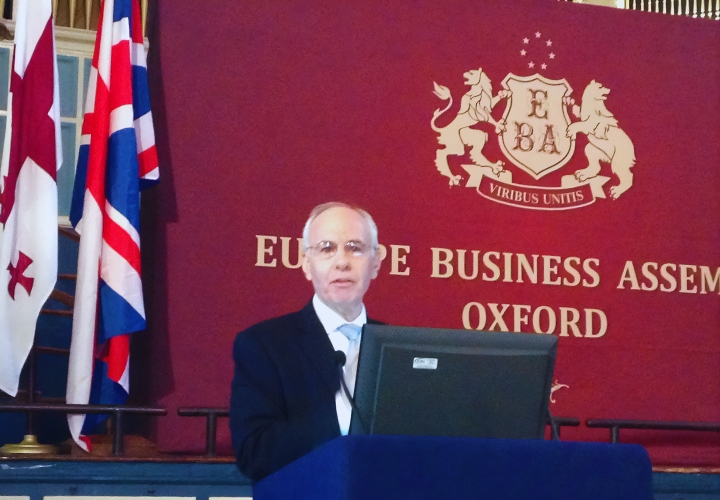
Marking the 60th anniversary of the World Academy of Art and Science, WAAS@60: A Planetary Moment served as a high-level strategic intervention during a period of unprecedented global systemic crisis. The event transcended traditional academic celebration to address the “perfect storm” of existential threats—including the climate emergency, nuclear proliferation, and the disruptive power of new technologies—that current governance structures are failing to manage. By convening global thought leaders and policymakers, the conference focused on catalyzing a transition toward a new human-centered development paradigm, emphasizing that the survival of civilization now depends on shifting from fragmented, nationalistic competition to an integrated, planetary consciousness rooted in human security and collective well-being. Read more.
EVENT
Democratizing Global Governance
Online, April 12, 2021
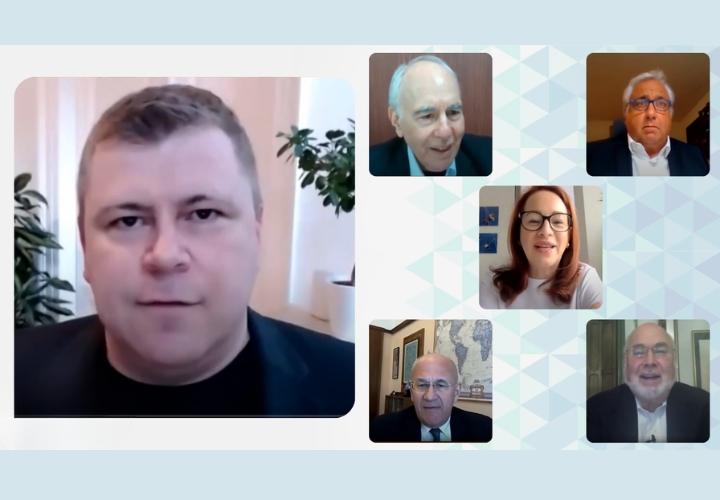
This WAAS Talks session addresses the widening disconnect between the current top-down international order and the urgent needs of the global population, advocating for a fundamental democratization of global governance. Rather than viewing global administration as the exclusive domain of nation-states and elite bureaucracies, the dialogue explores how to incorporate the voices of civil society and “we the peoples” into the heart of decision-making. By examining the structural reforms necessary to make international institutions more transparent, accountable, and inclusive, the session seeks to transform global governance from a tool of geopolitical management into a truly representative system capable of ensuring human security and justice for all. Read more.
Reports & Articles
- Human Security For All (HS4A) Report
October 2022 – March 2024 - Cadmus Journal. Special Issue on Human Security: Part 2
August 2023 - Cadmus Journal. Special Issue on Human Security Part 1
March 2023 - Human Security: Practical, Urgent, and Necessary – Jonathan Granoff
September 20, 2022 - Approaching Human Security – Jonathan Granoff
November 6, 2020 - Integrated Approach to Peace & Human Security in the 21st Century – Garry Jacobs
October 26, 2016 - A New Paradigm in Global Higher Education for Sustainable Development and Human Security
November 29, 2021 - ‘National Security’ is Too Crude to Protect Us From Pandemics. It’s Time to Shift to Human Security Instead — Newsweek
March 17, 2020 - Building human security for Afghanistan – The Hill
28 August, 2021