|
Running on EXTRA time…
Insights from the EXTRA Working Group to help you
keep track of ‘Existential Threats and Risks to All’
|
Welcome
to the EXTRA Newsletter
|
EDITORIAL
|
|
Water Insecurity - A Core Existential Threat
The latest flagship report of the UN University’s Institute for Water, Environment and Health (UNU-INWEH) warns of a potentially irreversible condition, which the authors refer to as “Water Bankruptcy”. A structural imbalance between rising demand and dwindling supply is driving this deepening crisis. In this issue, we respond by providing a detailed overview of the latest reports and news on water security, as well as an article by Prof Thomas Reuter on the main implications of this crisis. In this edition, we also introduce a new section on Countermeasures that covers the latest efforts to mitigate existential risks and enhance resilience.
Lorenzo Rodriguez, Editor, EXTRA Newsletter
Prof Thomas Reuter, Co-editor & Chair, EXTRA Working Group
|
|
|
INTERVIEWS & WEBINARS
|
|
Original, short interviews or discussions with experts and stakeholders on various categories of existential challenges.
|
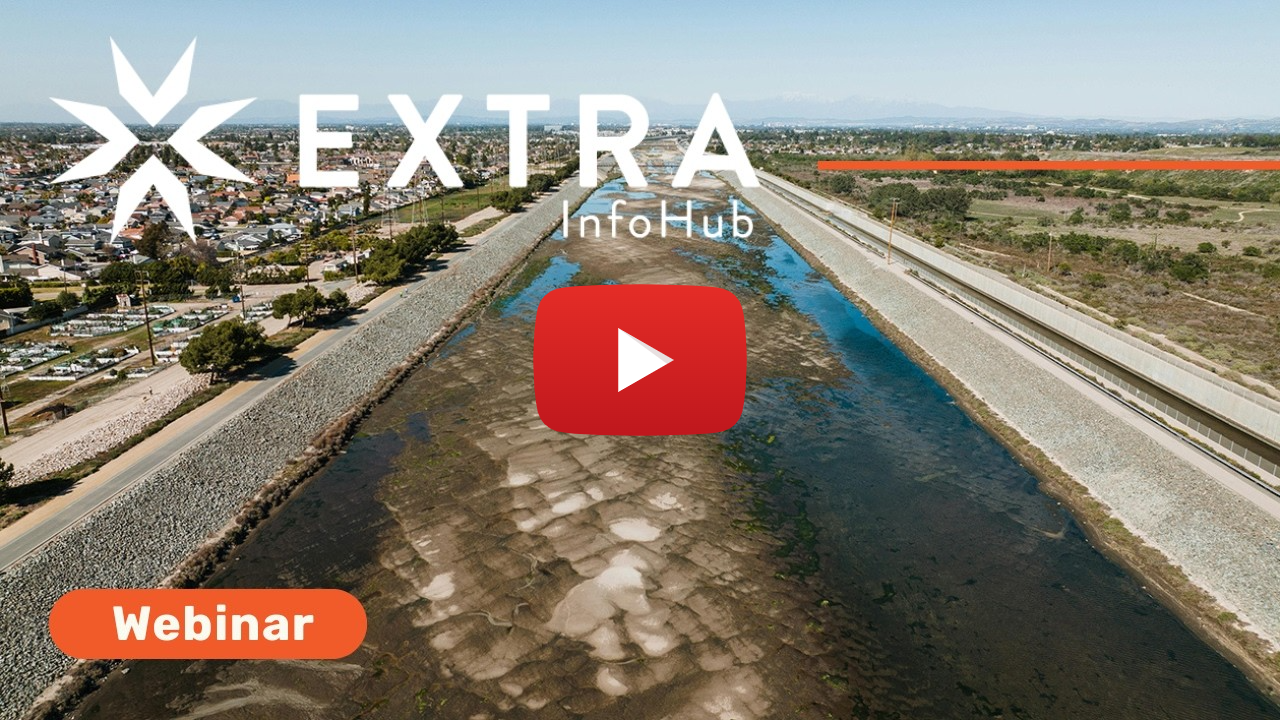
Averting Water Bankruptcy: Global Water Supply Risks and
Countermeasures
Despite water security (SDG 6) being a UN priority, UNU-INWEH has reported three decades of rising water insecurity, now merging into water bankruptcy. Climate change and surging demand from sectors like AI and agriculture are depleting essential water sources globally. In a recent webinar, the EXTRA team’s Ana Paraschiv and Thomas Reuter convened global experts—including Erik Solheim, Prof. Manfred Stock, and Vinod Mishra—to discuss these critical challenges and potential solutions.
|
 |
|
|
ARTICLES, ESSAYS & IDEAS
|
|
Original articles, op-ed pieces, and more – commissioned by EXTRA.
|
|
|
Implications of Water Bankruptcy for Human Survival
|
|
Thomas Reuter, EXTRA, Chair & Newsletter Co-editor
|
 |
|
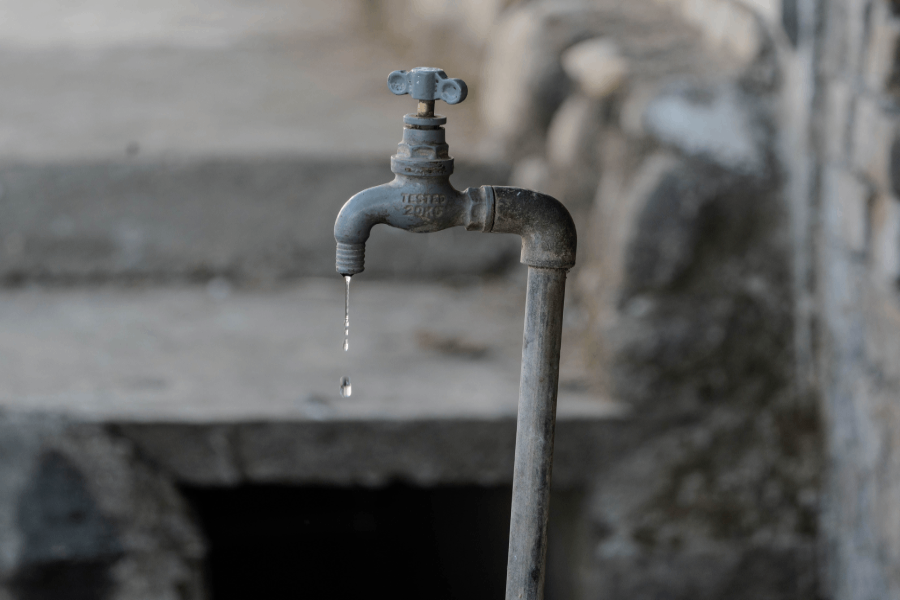
Water insecurity has long posed a daily threat to survival in arid regions, but the wider and more serious implications of global water bankruptcy are yet to be fully acknowledged in the Global North. One reason is a failure to account for secondary effects, such as the adverse impact of water scarcity on global food security, migration, and conflict. Another is a failure to grasp that even relatively water-rich ecosystems are vulnerable to structural imbalances between growing demand and dwindling supply.
Read More
|
|
|
|
|
UPCOMING EVENTS
|
|
A selection of events to be aware of that are organized by EXTRA, allies, partners and organizations on our radar.
|
|
|
Saudi Water Week 2026
|
|
Saudi Water Partnership Company & Partners
HRitz Carlton, Jeddah, Saudi Arabia (In-Person Event) | June 28–July 2, 2026
|
|
Read More
|
|
|
AIDA World Water Law Congress 2026
|
|
International Association for Water Law (AIDA)
University of Oslo, Faculty of Law, Oslo, Norway (In-Person Event) | June 24–26, 2026
|
|
Read More
|
|
|
15th Meeting of the Open-Ended Working Group of the Basel Convention (OEWG-15)
|
|
Secretariat of the Basel Convention / UNEP
Geneva International Conference Centre (CICG), Geneva, Switzerland (In-Person Event) | June 23–26, 2026
|
|
Read More
|
|
|
London Climate Action Week 2026
|
|
E3G (Climate Think Tank) & Partners
London, United Kingdom (Hybrid Event) | June 20–28, 2026
|
|
Read More
|
|
|
Singapore International Water Week 2026
|
|
Singapore International Water Week (SIWW) & Public Utilities Board (PUB)
Singapore (In-Person Event) | June 15–18, 2026
|
|
Read More
|
|
|
|
|
|
|
REPORTS
|
|
Our latest selection of outstanding reports on Existential Threats and Risks. Beat the info glut by taking a look at our monthly list.
If you have time, take a look at the 20 Notable Reports or browse the complete EXTRA Risk Directory on our website.
|
|
|
|
The Global Water Crisis: Stress, Scarcity, and Conflict
Council on Foreign Relations (CFR)
March 2026
Water is this decade's defining security issue. With 2 billion people lacking access to clean water and 75% of the population facing insecurity, scarcity is destabilizing states and fueling diplomatic tensions. A record 420 water-related conflicts in 2024 underscore an urgent need for cooperative institutional frameworks.
Global Water Bankruptcy: Living Beyond Our Hydrological Means in the Post-Crisis Era
United Nations University Institute for Water, Environment and Health (UNU-INWEH)
January 2026, 72p.
We are approaching "global water bankruptcy," with 75% of the population now water-insecure. We must shift from reactive emergency management to "bankruptcy management," prioritizing honest diagnostics, ecosystem protection, and the radical reform of water-intensive agriculture.
Global Water Monitor 2025
Australian National University and Global Water Monitor Consortium
January 2026, 64p.
"Climate whiplash" is intensifying the water cycle, with annual increases in extreme rain (2.3%), heat (1.2%), and record-dry months (10%). In 2025, water-related disasters caused 5,000 deaths, displaced 8 million people, and cost $360 billion.
State of Global Water Resources 2024
World Meteorological Organization
September 2025, 98p.
In 2024, 60% of river basins saw abnormal flows, and glaciers lost mass for the third consecutive year. Urgent investment in monitoring and data sharing across Africa, South Asia, and South America is essential to prevent hydrological instability from outstripping global governance.
Extreme Heat and Agriculture
Food and Agriculture Organization of the United Nations & World Meteorological Organization
April 2026, 108 pp.
Extreme heat, marked by prolonged above-average day and night temperatures, directly damages crops, livestock, ecosystems, and human health. When combined with other stressors, it can trigger compound failures that devastate entire agricultural systems.
State of the Global Climate 2025
World Meteorological Organization
March 2026, 46p.
The 2015–2025 period was the hottest decade on record, with 2025 reaching 1.43°C above pre-industrial levels. With Earth’s energy imbalance at a 65-year high and polar ice rapidly retreating, these shifts have triggered extreme weather and widespread global disruption.
Capital, Code, and Nature: Problematizing the 'Twin Transition.' Globalizations
Paraná & Santaella-González
December 2025, 21p.
The "twin transition" of digitalization and decarbonization is not a neutral upgrade but a contested political-economic restructuring. The authors argue that bundling code and nature risks reinforcing existing power imbalances and systemic inequality, regardless of green rhetoric.
State of Rights of Nature
Community Environmental Legal Defense Fund (CELDF)
June 2026.
Explores how "Rights of Nature" laws are often diluted or banned due to their challenge to institutions that profit from environmental exploitation. It frames the movement as a fundamental power struggle and offers principles to distinguish authentic, enforceable legislation from compromised efforts.
|
|
|
|
|
COUNTERMEASURES
|
|
A new addition to the newsletter, with important models or targeted recommendations for effective existential risks management, sustainability and human security.
|
|
|
|
Global Justice Report: A Plan for Equality & Prosperity within Planetary Boundaries
World Inequality Lab
June 2026, 136p.
Lays out a plan for a transition to a just and sustainable world, providing hard evidence that this is a realistic aim, achievable by the end of the century.
Navigating Towards Water Resilience
WWF and Greening Financial Regulation Initiative (GFRI)
May 2025, 132p.
Water risk is a systemic economic threat, not just an environmental one. Current reporting fails to account for basin-level dynamics and supply-chain vulnerabilities, leaving investors dangerously exposed to compounding climate-water interactions. The WWF Water Risk Filter is proposed as a vital due diligence tool for mapping these operational and financial risks.
Redefining water scarcity through the integrated water strategic resilience index amid climate and conflict pressures
Verre, Kumar, Berndtsson & Hashemi, Scientific Reports
March 2026, 16p.
Traditional water scarcity metrics focus on availability alone. Introduces the Integrated Water Strategic Resilience Index (IWSRI), combining hydrology, governance, infrastructure, economics, and conflict exposure. The key insight is that water insecurity is primarily a systems failure, not just a supply problem.
Africa Water Vision 2063 and Policy
African Union
14 February 2026, 68p.
Outlines an action plan to achieve water security under Africa's 2063 Agenda, addressing the threats posed by drought-driven GDP loss, displacement, and instability. With the population set to reach 3.2 billion by 2070, the continent must double food production, which will require a twofold increase in agricultural water withdrawals. The plan focuses on sustainable water and sanitation systems to balance this explosive demand.
Ten Strategies to Promote Climate Resilience and Sustainability of Global Forests
Wang et al
May 2026, 10p.
Synthesizing insights from resilience theory and global practices across ecological, social, and institutional dimensions, the paper proposes 10 mutually reinforcing strategies that together provide an actionable roadmap for climate-resilient forest stewardship.
From Science to Policy: Planetary Solutions in Action
Frontiers Policy Labs, UNU-CPR, UNESCO, and PIK
April 2026, 46p.
Translates 25 prize-winning studies into policy pathways to address the fact that seven of nine planetary boundaries have been exceeded. Proposes four essential levers for reform: decarbonise hard-to-abate sectors, stabilise volatile water systems, integrate biodiversity protection into production, and move economic frameworks beyond GDP to better align with planetary limits.
The Crucial Role of Wild Animals in Rangeland Ecosystems
Global Rewilding Alliance
February 2026, 7p.
Rangelands cover over 50% of Earth's land, supporting billions, yet remain undervalued. This text introduces "Ecological Uplift," a strategy that integrates re-wilding into working landscapes, arguing that wildlife is essential—not optional—for building rangeland resilience.
|
|
|
NEWS from the World Press
|
|
Links to a must-read selection of news for a global outlook across the spectrum of Existential Threats and Risks sourced from the media and web.
|
|
Dushanbe Declaration Promotes High-Level Engagement on Water. IISD SDG Knowledge Hub, June 4, 2026.
In Dushanbe, 2,500 delegates from 110 countries adopted the Dushanbe Declaration to accelerate progress on SDG 6. This commitment reinforces water security as a top diplomatic priority and serves as a key milestone for the 2026 UN Water Conference in the UAE.
Is Water the Next Geopolitical Battle? GZERO, May 27, 2026.
The World Bank has launched "Water Forward" to improve access for 1 billion people, yet water security remains a critical threat. Eurasia Group has identified "The Water Weapon" as a top risk for 2026, highlighting the growing potential for freshwater scarcity to be used as a tool of geopolitical conflict.
Study Warns Biodiversity Loss Could Trigger Wave of Debt Crises. Reuters, June 5, 2026.
Researchers from the Universities of Sussex, Sheffield, and Heriot-Watt have developed the first biodiversity-adjusted sovereign credit model. It warns that ecosystem collapse could add $162 billion to annual global debt interest, highlighting $83 trillion in assets mispriced by markets that overlook nature-related risks.
The Bomb Wins Again: How the 2026 NPT Review Conference Became a Monument to Nuclear Complacency. IDN-InDepthNews, May 25, 2026.
After failing to reach any substantive agreement on disarmament for the third time, the world’s most critical nuclear arms control treaty remains stalled. This breakdown at a time of extreme global instability threatens to accelerate nuclear proliferation.
The Quadrillion-Dollar Disagreement on AI and the Economy. A. Shenk, AI Frontiers, May 11, 2026.
AI economic forecasts span an excessively wide range of potential futures, making planning effectively impossible. The author seeks to narrow that range by examining three core assumptions that drive divergent predictions and exploring ways to test them now.
Antarctic Sea Ice Defied Global Warming for Decades — Now, Hidden Ocean Heat Is Breaking Through. The Conversation, May 7, 2026.
New research shows that warming circumpolar deep water is increasingly encroaching on Antarctica’s continental shelf, destabilizing the ice shelves that prevent sea-level rise. This is compounded by a feedback loop where shrinking sea ice absorbs more solar heat, further accelerating ice loss and threatening global coastlines.
FAO Sounds Alarm on Fertiliser Scarcity and Food Supply. Agriland, May 7, 2026.
The FAO warns the Strait of Hormuz closure is causing a global fertilizer crisis, with urea prices spiking by 46% month over month. As a critical transit point for agrifood inputs, this disruption threatens to cut crop yields and drive food inflation, disproportionately harming import-dependent nations through 2027.
The Ocean Is Fighting Climate Change and We're Trying to Help It — Here's How. The Conversation, May 7, 2026.
Scientists are deploying new oceanographic instruments to measure the carbon storage capacity of the world's seas, exploring ocean-based climate solutions — from kelp restoration to iron fertilization — as part of a broader effort to enhance the ocean's role as the planet's largest active carbon sink.
Deforestation Lessens Amazon Rainfall — and Climate Change Hastens That Process, Study Finds. Phys.org, May 6, 2026.
A new study shows that rainfall in the southern Amazon is declining by 8–11% annually, with 52–72% of this decline driven by deforestation—an effect previously underestimated by ~50%. As the region warms, the tipping point for forest dieback is accelerating, making it reachable with significantly less tree loss than predicted.
100 Times Worse? Thawing Permafrost May Be More Dangerous Than Previously Thought. SciTechDaily, April 9, 2026.
Research from the University of Leeds published in Earth's Future shows that thawing permafrost becomes 25–100 times more permeable, significantly accelerating the release of carbon and methane. This creates a self-reinforcing feedback loop that threatens to irreversibly destabilize the global climate.
|
|
|
|
|
|
|
|