|
Running on EXTRA time…
Insights and Updates from the EXTRA InfoHub
to help you keep track of 'Existential Threats and Risks to All'
|
Monthly EXTRA Global Risk Update
|
EDITORIAL
|
|
Global Health and Security Risks In the Age of AI
This edition focuses on emerging risks at the intersection of Global Health and AI, highlighting one of many crossovers between existential risks in this era of polycrisis. Our update on the latest risk reports prioritizes this theme. UN advisor and futurist Jerome Glenn highlights efforts to address the growing gap between AI development and governance guardrails.
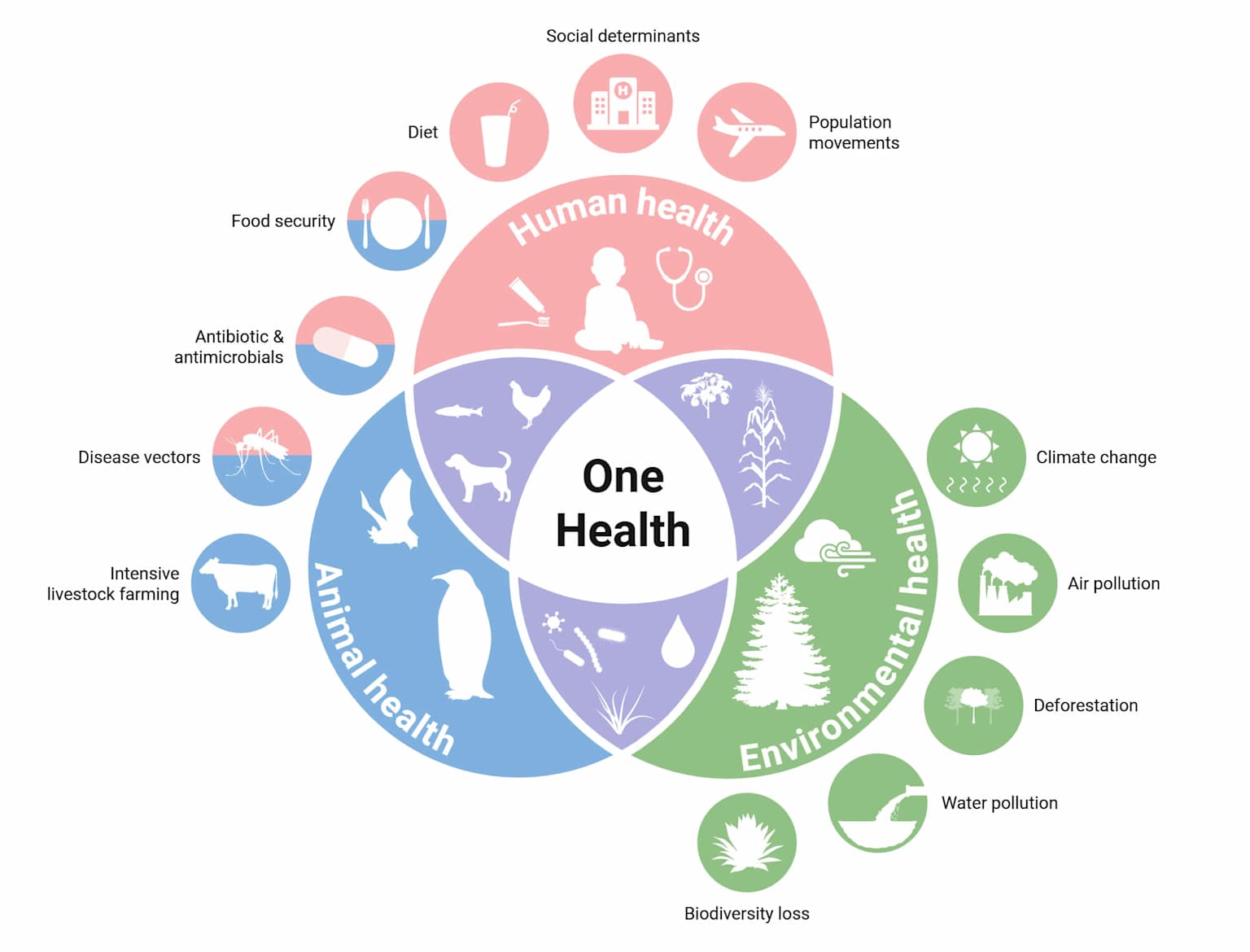
In our second video feature, we asked world-leading experts Andy Haines, Nabeel Goheer and Stefan Brunnhuber to discuss emerging and resurfacing risks in global health across the spectrum, from pandemics to antibiotic resistance and NCDs, and about the need to rethink health financing.
Connecting these issues are articles on AI use in the health sector, with Cris Popa Tache exploring legal aspects, Kirirti Prasad Choudhury drawing a key distinction between means and ends on the transformation of health, and Florent Pasquier stressing the need for transdisciplinary approaches.
Finally, we feature an article on unprecedented threats to maritime trade and security, as illustrated by the Strait of Hormuz crisis. The authors, both recently retired admirals, introduce the concept of Strategic Maritime Convergence to explain how local disruptions propagate across interconnected systems through cascading effects, arguing that safeguarding continuity of the global functions these infrastructures support must now be prioritized.
Lorenzo Rodriguez, Editor, EXTRA Newsletter
Prof Thomas Reuter, Co-editor & Chair, EXTRA Working Group
|
|
|
INTERVIEWS & WEBINARS
|
|
Original, short interviews or discussions with experts and stakeholders on various categories of existential challenges.
|
AI Update with Jerome Glenn, CEO of The Millennium Project, and Chair of the AI Advisory Committee to the UN General Assembly
In a fascinating update, Jerome reflects on risks associated with relentless military and civilian competition to achieve AI hegemony, on progress toward a UN-brokered AI agreement, and on quieter moves toward a G2 regulatory agreement to slow the currently reckless race between AI leaders USA and China. He stresses the need for nation states and civil society to build capacity to monitor and regulate AI better, and to engage in foresight exercises that can help us anticipate and prepare for where AI may be in 1, 5, or 10 years. He argues that signs of emerging artificial super intelligence (ASI) suggest the window for anticipatory action is small and closing rapidly.
|
 |
Global Health Futures: Scanning the Horizon for Emerging Risks and Opportunities
Ana Maria Paraschiv and Prof Thomas Reuter from the EXTRA ask three world-class health experts to share their insights into emerging global health risks, as well as opportunities for policy, financial and technical innovation. Now existential risks are also emerging within the health sector itself. Non-communicable diseases remain the leading causes of death globally. Other concerns include rising Antimicrobial Resistance (AMR), a mental health epidemic, and a health workforce and funding crisis, while significant gains from AI use will depend on adequate regulation.
|
 |
|
|
ARTICLES, ESSAYS & IDEAS
|
|
Original articles, op-ed pieces, and more – commissioned by EXTRA.
|
|
|
|
|
Anticipatory 'One Health' Governance under International Law: Can AI Make the Difference? (Or Not)
Cristina Elena Popa Tache, Strategic Governance and Legal Foresight Specialist, EXTRA
AI can act as the "nervous system" of One Health governance by detecting risks and optimizing resources. Because algorithmic alerts require rigorous human validation rather than blind automation, governance must prioritize a verifiable cycle from observation to evaluation. At the same time, various international and regional rules exist, but a unified global framework for accountability, audit, and biosecurity remains critically lacking.
Read More
|
|
|
|
|
Rethinking Healthcare for the Hyper-Capability Era: A Vision for Technology in the Service of Humanity
Kiriti Prasad Choudhury, Strategic Governance and Legal Foresight Specialist, EXTRA
We keep asking how intelligent technologies can make healthcare faster, more affordable, and more efficient. However, what exactly should technological progress enable human beings to become? Healthcare is where technology meets one of our deepest aspirations: To live well. Revolutionary progress in healthcare may therefore depend not on more intelligent technologies alone, but on a deeper understanding of what humanity should use those technologies for.
Read More
|
|
|
|
|
Why the Three Axioms of Transdisciplinarity Matter in the Age of Artificial Intelligence and Global Health
Florent Paquier, President, International Centre for Transdisciplinary Research and Studies
Artificial intelligence cannot be governed by technical criteria alone. Basarab Nicolescu's transdisciplinary methodology provides a robust framework for evaluating global health algorithms. Grounded in a 'One Health' perspective, this approach accounts for human responsibility, social equity, patient experience, and ecosystem interdependencies. By integrating rigor, openness, and tolerance, these principles can effectively enhance WHO guidelines on the ethics and regulation of AI.
Read More
|
|
|
|
|
Maritime Infrastructure and Global Risks: Why fragility of global trade is the strategic challenge of the 21st century
Admiral (ret.) PhD Aurel POPA, President of the Maritime Security Forum
Rear Admiral (ret.) PhD Sorin Learschi, Director of the Maritime Security Forum
Globalization relies on an interconnected network of maritime, energy, and digital infrastructures where local disruptions can trigger global systemic risks. Because traditional security approaches are inadequate, we introduce the Strategic Maritime Ecosystem framework and Strategic Maritime Convergence to explain how disruptions cascade across systems.
Read More
|
|
|
|
|
UPCOMING EVENTS
|
|
A selection of events to be aware of that are organized by EXTRA, allies, partners, and organizations on our radar.
|
|
|
Health IT Summit 2026
|
|
AFCEA Bethesda
In-Person Event | September 2, 2026 @ Bethesda Marriott, Bethesda, Maryland, USA
|
|
Read More
|
|
|
Third Meeting of the Global Initiative on AI for Health (GI-AI4H)
|
|
International Telecommunication Union (ITU), World Health Organization (WHO) & World Intellectual Property Organization (WIPO)
In-Person Event | September 16-18, 2026 @ Hangzhou, China
|
|
Read More
|
|
|
|
|
REPORTS
|
|
Our latest selection of outstanding reports on Existential Threats and Risks. Beat the info glut with our monthly update.
If you have time, take a look at the 20 Notable Reports or browse the complete EXTRA Risk Directory on our website.
|
|
|
|
State of the Future 20.0
The Millennium Project
July 2026, 500p. Identifies 15 major global risks, including cutting-edge challenges such as AGI and AI-powered robots. Chapter 2 examines 29 variables and argues that humanity is winning in many areas. Still, where it is losing or failing to progress, the outcomes could be very serious. Examines the UN Secretary-General's proposed five foresight strategies to improve global decision-making (Our Common Agenda, 2021). A summary is available free. See also our podcast with Millennium Project CEO, J. Glenn.
Prioritization of Risks from Artificial Intelligence: A Delphi Study of 272 International Experts
Saeri, Graham, Noetel et al., MIT AI Risk Initiative (MIT FutureTech)
June 2026, 94p. A three-round Delphi study of 272 international experts from 37 countries rated 24 AI risk domains on probability, severity, vulnerability, and responsibility over a 2025–2030 horizon. Under business-as-usual, experts judged 18 of 24 risks as exceeding a 10% probability of catastrophic outcomes (≥1 million deaths or ≥USD 100B in losses). Even with pragmatic mitigations, five risks — dangerous capabilities, weapons & cyberattacks, environmental harm, inequality/unemployment, and power centralization — remained above that threshold.
Global Landscape of Climate Finance 2026
Climate Policy Initiative (CPI)
June 2026, 78p. Finds they reached USD 2 trillion annually in 2024, led by resilient private finance in domestic markets. Domestic private actors now account for 60% of total mitigation finance. Clean energy investment grew 17% in 2024, yet the growth rate remains far too slow: an average of USD 7.8 trillion per year is needed from 2025–2030, rising to USD 9 trillion from 2031–2035. Adaptation finance has plateaued at USD 64 billion, while retreating international public flows push emerging economies toward domestic and catalytic capital.
AI Scenarios 2030: Helping Policymakers Plan for the Future of AI
Government Office for Science (GO-Science), with AISI & DSIT
June 2026, 92p. Updates the UK's five AI scenarios to 2030, built around six critical uncertainties, ranging from "Slow Burn" to a high-risk "Take-Off." Warns that AI could deliver major productivity and scientific gains but could also cause "serious, potentially even existential harms" absent government intervention, including AI-enabled cyberattacks, dual-use science capabilities, loss of human control, and significant cognitive-labor displacement.
Parasol Lost: Recovery Plan Needed
Institute and Faculty of Actuaries (IFoA) & University of Exeter
January 2026, 31p. Warns that global temperatures are accelerating faster than predicted due to the loss of "aerosol cooling" — a pollution-driven sunshade that has offset around 0.5°C of warming and is now receding as shipping emissions are cut. Without action, warming is likely to reach 2°C before 2050, raising the risk of climate-driven inflation, financial shocks, insurance withdrawal, and "Planetary Insolvency".
|
|
|
|
|
COUNTERMEASURES
|
|
A new addition to the newsletter, with important models or targeted recommendations for effective existential risks management, sustainability and human security.
|
|
|
|
Sustainable Development Report 2026: Implementing Sustainable Development - 2030 and Beyond
Sustainable Development Solutions Network, SDG Transformations Center, J. Sachs et al
June 2026, 518p. Sets 8 priorities for change, beginning with an urgent need to reduce global strategic competition and conflict and refocus on safeguarding global prosperity.
Small but mighty — climate resilience in Europe's small municipalities European Environment Agency
June 2026, ~8p. Makes the vital point that local action is crucial for reaching national policy targets in environmental conservation and health. Yet local actors such as councils do not receive the support they need for effective SDG localization.
Food systems transformation would reshape global agriculture.
M. Gibson et al, Nature
July 2026, 23p. Food systems contribute around one-third of all GHG emissions. They are a leading factor in exceeding planetary boundaries. Hence, calls to transform food systems persist, but the impacts on agriculture remain underexplored.
The Great Cosmic Silence: What Does the Fermi Paradox Tell About the Future of Humanity?
Heikki Patomäki, Global Policy
July 2026, 13p. Argues the capacity of complex technological societies to sustain long-term, risk-minimizing, and cooperative action represents a civilizational bottleneck. The challenge of organizing extended temporal responsibility raises fundamental questions about the institutional conditions required for a cooperative global order.
To Imagine a New Development Theory from the Global South
Tricontinental
July 2026, 7p. Contends that the Global North's prescriptions for development, including the IMF's dogma of privatization and deregulation, have failed, and calls for a new development theory rooted in the experiences of the Global South. The latter calls for a bigger role for the state, by building infrastructure and expanding its general capacity to help national economies grow.
|
|
|
NEWS from the World Press
|
|
Links to a must-read selection of news for a global outlook across the spectrum of Existential Threats and Risks sourced from the media and web.
|
|
Inside the UK's Bold Experiment in AI Safety. TIME, January 2026
Profiles the UK's AI Safety Institute and its pioneering government-led effort to identify current and emerging dangers within AI models, positioned away from the commercial conflicts of interest that constrain industry researchers.
An International AI Slowdown Is Ready Whenever Politicians Are. Felix Choussat and Adam Khoja, AI Frontiers, August 2026
Lends support to a key argument raised by Jerome Glenn in this month's video feature, namely that we need to slow down or pause AI development if we are unable to establish an adequate governance system in the near future.
The Iran-Hormuz Crisis Proves the Old Answers Are Already Dead. Nafeez Ahmed and Divyesh Desai, Phase Shift, May 2026
Argues that the closure of the Hormuz Strait and the associated crisis are only accelerating and exposing the slow failure of a dying energy system.
Why A Record-Hot Ocean Is Supercharging The El Niño Effect. Ingmar Rentzhog, FORBES, July 2026
The ocean has absorbed much of humanity's climate emissions debt but is now heating dangerously, with serious consequences for the severity of global weather phenomena such as El Niño.
Santa Marta Report by 57 Nations Defines Rapid Fossil Fuel Transition Path. Mongabay, July 2026
Outlines five pathways to a just, orderly transition, including shifting financing and subsidies away from fossil fuels toward green energy. But sponsors Colombia and the Netherlands appear to be realigning toward fossil fuels, as Vanuatu and Ireland prepare to co-host the next conference in 2027.
Why Climateflation Will Drive Food Prices More Than War. Ingmar Rentzhog, Forbes, Aug 2026
Points out that climate change impact on the EU grain harvest will put more pressure on food prices than the war in Iran and Ukraine.
|
|
|
|
|
|
|
|